
Dressmaking Fabric Comparison: Cotton, Viscose, Jersey and Eco-laminated.
June 3, 2026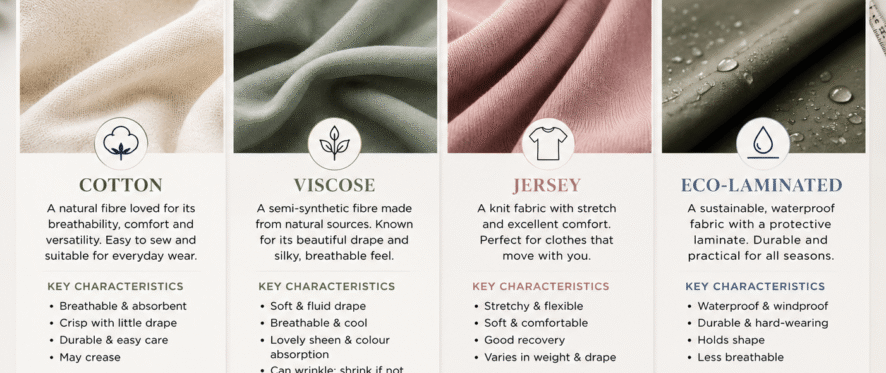
0 items in your cart
Your cart is currently empty.
Start shopping Fast Delivery
Excellet Quailty
Unique designs
Fast Delivery
Excellet Quailty
Unique designs
There’s a specific kind of hesitation that happens before a new dressmaking project. Pattern in hand, browser tab open, and suddenly the question arrives: which fabric will actually work for this? Not which one looks nice. Which one will behave, drape right, and still look good after the fifth wash?
Most fabric guides respond to this by listing twenty options. That doesn’t help. This dressmaking fabric comparison focuses on four core fabrics most home sewers reach for: cotton, viscose, jersey and eco-laminated. Each has a distinct personality. Each suits a different type of dress. Understanding even these four well gives you far more confidence at the fabric stage than vaguely knowing twenty.
At Sewing-Sanctuary, all four fabric types are available together, including in-house print designs from founder Sarah, which means you can work through a full project brief from one place rather than juggling suppliers before you’ve even cut a pattern piece. First, though, the decision itself needs a foundation.
Buying fabric by look alone is one of the most common mistakes in dressmaking. A print can be stunning, but if the fabric has the wrong drape or weight for the pattern, the finished dress will disappoint regardless. Three properties settle most fabric decisions before you commit.
Drape is the quality that determines whether a dress skims, flows, or holds its shape. Fluid drape suits wrap styles and bias cuts, where the fabric is meant to move with the body. Crisper drape suits A-line and structured silhouettes, where the skirt needs to hold a shape away from the body. Both fiber type and weave construction influence this, which is why a cotton lawn behaves very differently from a cotton jersey even though they share the same base fiber.
Weight is measured in GSM (grams per square metre) or oz per yard, and it shapes both the silhouette and the seasonality of a garment. Lightweight fabrics create movement and breathability; heavier fabrics hold structure and provide warmth. A summer maxi dress and a structured shift dress might share a pattern size, but they need fabrics from completely different weight categories to look right. If you want a concise primer on assessing fabric weight and drape before you buy, see this guide on understanding fabric weight and drape.
The clearest guide to stretch behavior is woven versus knit. Woven fabrics have very little give; knit fabrics stretch and recover. This affects pattern selection as well as sewing technique. Care is equally worth knowing at the buying stage, not the finishing stage. Pre-washing habits, temperature sensitivity, and how a fabric responds to washing will all shape how the finished garment holds up over time.
Cotton earns its reputation as the default beginner fabric because it’s genuinely forgiving. It presses cleanly, cuts without shifting, sews with a standard needle and thread, and doesn’t require any specialist handling. That’s not a compromise. That’s a feature, especially when you’re learning how a new pattern is constructed.
Woven cotton falls in the 3, 8 oz/yd² range for most dressmaking weights. Cotton lawn sits at the lighter end, with a soft but moderately crisp drape. Cotton poplin is slightly heavier and holds its shape more firmly. Neither is fluid in the way viscose is, and that’s the point: cotton is the fabric you choose when you want a dress to have structure, not movement.
Cotton works particularly well for A-line dresses, shirt dresses, shift dresses, and children’s clothing. The fabric holds a clean silhouette without collapsing, which makes it excellent for patterns with defined seams and fitted bodices. It also takes prints well, which is why printed cotton is one of the most popular choices for home dressmakers who want something distinctive rather than plain.
Cotton is machine washable, durable, and straightforward to maintain. The main practical note is pre-washing: cotton can shrink, so washing your fabric before cutting prevents the dress from coming out smaller than expected after its first laundry cycle. Colours can fade gradually at high temperatures, so a cool to medium wash cycle protects the print over time.
Viscose behaves nothing like cotton, even though both can look similar at a glance. It has a silky, fluid hang that’s lightweight, breathable, and soft against the skin. Many makers reach for it when the design calls for movement and elegance, it’s a popular choice for dresses worn at events or in warmer months.
Viscose dress fabric commonly sits in the 80, 160 GSM range, often lighter than cotton poplin but with dramatically more drape. Where cotton holds its shape away from the body, viscose falls toward it. This makes viscose ideal for bias-cut slips, wrap dresses, and any style where fluid movement is the design intention rather than a side effect. The fabric skims the figure rather than holding a fixed silhouette.
Wrap dresses, maxi dresses, midi dresses, slip-style dresses, and loose summer styles all work exceptionally well in viscose. The fabric’s softness and natural movement support the tie-waist and V-neck construction of a wrap, while its length and flow make maxi styles look intentional rather than droopy. It doesn’t hold structured shapes as well as cotton, and that’s by design: when the pattern calls for movement, viscose delivers it.
Viscose is vulnerable when wet. It can shrink and distort if machine washed at high temperatures, so a cool gentle cycle or careful hand wash is the right approach. Reshape the fabric flat while it dries rather than wringing it. The other caveat worth knowing before you buy: viscose shifts when you cut it. Using pattern weights rather than pins, and cutting on a single layer, makes this much more manageable, especially for beginners working with it for the first time. For step-by-step washing advice to avoid shrinking viscose, check this practical guide on how to wash viscose without shrinking.
Jersey is a knit, not a woven, and that single difference changes everything about how you sew it and what you make with it. It stretches, it recovers, and it moves with the body in a way that no woven fabric can replicate. For dresses that need to be worn regularly and feel comfortable all day, jersey is often the most practical choice.
Single jersey for dressmaking commonly falls in the 100, 230 GSM range, with many dress weights sitting around 150, 220 GSM. It’s soft, body-skimming, and forgiving on fit because the stretch absorbs minor differences between the garment and the wearer. Two-way stretch runs in one direction, usually width-wise; four-way stretch runs in both. Most jersey dress patterns specify which stretch level they require, so checking the pattern envelope before buying is worth the thirty seconds it takes.
Jersey works well for knit dresses, casual T-shirt dresses, fitted styles without zips, and wrap-style dresses in a knit version. The stretch means the dress goes on and comes off easily without needing a back opening, which simplifies construction significantly. Ponte knit, a denser and more stable jersey variation, is worth knowing for more structured or officewear jersey dresses where you want the fabric to hold its shape more firmly.
Jersey requires a ballpoint or stretch needle, which has a rounded tip that passes between the knit fibers rather than piercing and potentially damaging them. Skipped stitches are usually a sign the wrong needle is being used. A zigzag stitch or overlocker finish prevents seam breakage when the fabric stretches during wear. Cotton jersey washes reliably at moderate temperatures; synthetic jersey blends resist shrinkage but can pill if washed on a rough cycle over time.
Eco-laminated fabric isn’t a traditional dress fabric, and it’s worth being straightforward about that. It doesn’t drape. It doesn’t flow. But for dressmakers who also make practical items, or who want to add a functional layer to certain garment types, it fills a specific and useful gap that none of the other three fabrics cover.
Eco-laminated fabric is a woven base, often cotton, bonded to a thin, flexible, water-resistant coating. Many eco-laminated options use a PVC-free polyurethane laminate rather than traditional PVC or oilcloth coatings; for projects where a wipe-clean, water-resistant surface is the goal, this makes it a more considered material choice than conventional laminated fabric. The surface is durable and available in a wide range of printed designs, including in-house prints carried by Sewing-Sanctuary.
For flowing dress styles, eco-laminated fabric isn’t the right call. Its firm, structured surface resists the drape that those styles depend on. Where it does have real dressmaking-adjacent value is in practical garments: waterproof pinafores, children’s bibs, rain-resistant overskirts, and accessories made alongside a garment project. For bag makers who also sew clothing, eco-laminated handles the bag side. Cotton or viscose handles the rest.
Eco-laminated fabric is wiped clean rather than machine washed. Avoid ironing directly on the laminate surface; press from the fabric side or use a pressing cloth. Cut with sharp scissors and avoid excessive pinning through the coated layer, since repeated pin holes can affect the water-resistant surface. For beginners, its stability and non-fraying edges make it one of the easier fabrics to cut accurately, though it’s worth noting it requires specific handling and isn’t a conventional garment fabric.
The sections above build the knowledge. This is where that knowledge becomes a usable reference. Keep this chart close to your pattern when you’re at the fabric-selection stage, or browse the fabrics directly at Sewing-Sanctuary once you know what you’re looking for.
One practical note on sourcing: buying four fabric types from four different retailers creates real friction. Print matching becomes inconsistent, delivery timings don’t align, and minimum order rules vary across suppliers. Sewing-Sanctuary stocks cotton, viscose, jersey, and eco-laminated fabrics together in one place, including in-house print designs from founder Sarah. For dressmakers who want a full project brief sorted from a single source, that matters more than it might seem when you’re mid-project and realise you need something else.
This kind of comparison is most useful when kept close to your pattern rather than read once and filed away. The right approach is to start with the dress style, then work back to the fabric. Structured silhouette? Cotton. Fluid wrap or maxi? Viscose. Stretch and comfort? Jersey. Practical and wipe-clean? Eco-laminated. The fabric follows the design intention; it doesn’t lead it.
Knowing four fabrics well genuinely beats vaguely knowing twenty. You make faster decisions, waste less fabric on experiments that don’t suit the pattern, and end up with finished dresses that behave the way you expected them to when you started. That’s the point of building this kind of knowledge: not to collect information, but to use it.
When this dressmaking fabric comparison points you toward the right material, Sewing-Sanctuary is a good place to go next. Browse the cotton, viscose, jersey, and eco-laminated ranges, including the in-house prints, and find the fabric that fits both the dress and the maker.